
Breaking the Dependence on Imported Bearings
Nearly 20 years of trusted cooperation with a leading European medical equipment manufacturer.
 Application ImageMedical equipment / bearing installation
Project Overview
From import dependence to a reliable domestic alternative
A leading European medical equipment manufacturer had long relied on crossed roller slewing bearings supplied by the German brand INA. Although the products delivered stable performance, their high procurement cost continued to place pressure on profit margins.
The customer sought a Chinese alternative that could provide reliable quality and greater cost efficiency—but repeated trial products from several manufacturers failed to meet the required rotational accuracy and friction torque stability.
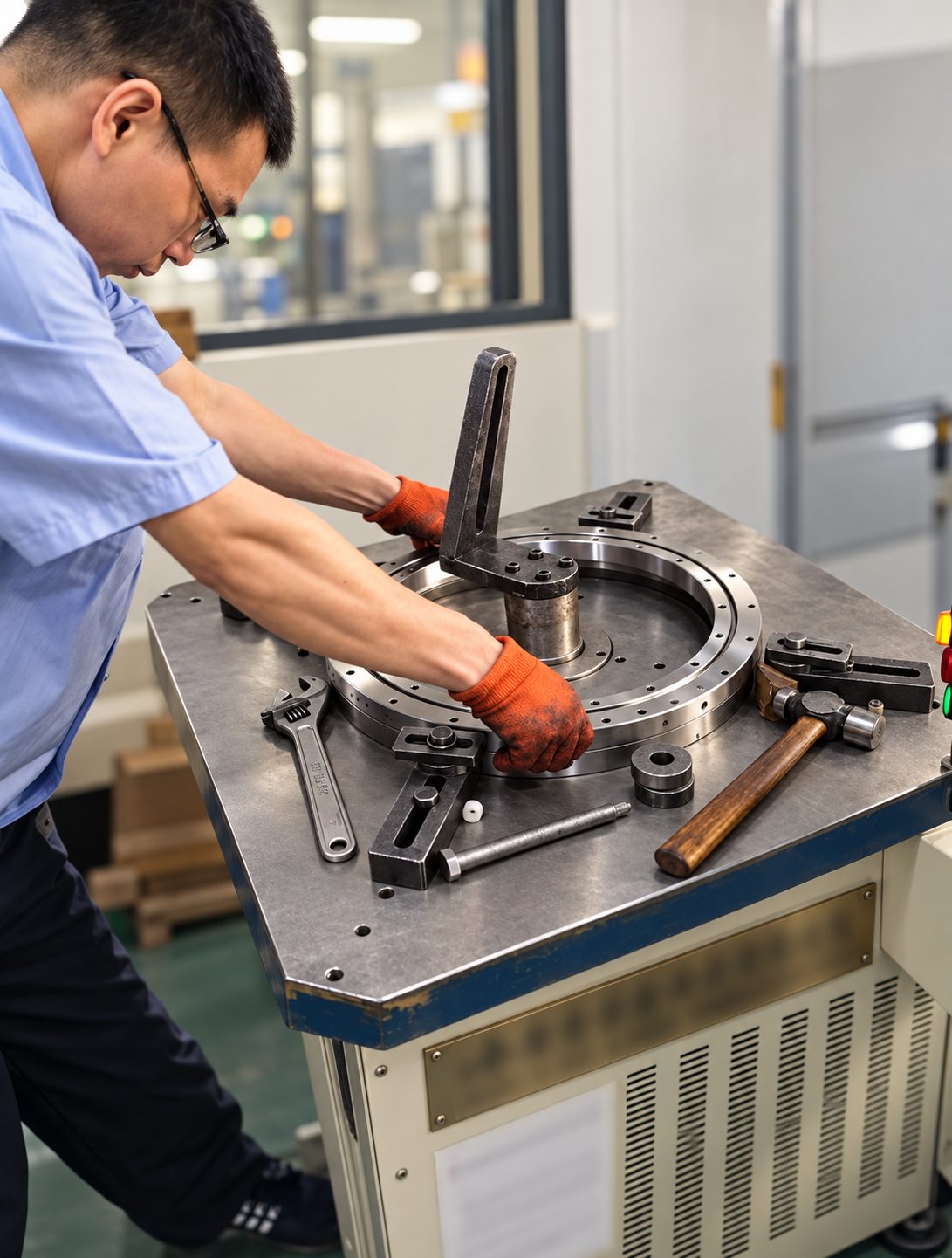 On-site InvestigationFactory visit / equipment assembly
The Challenge
Performance requirements beyond conventional applications
Through a long-term sealing-component supplier, the customer learned about our factory and invited our engineers to observe its equipment assembly process on site.
The investigation showed that the large bearing would withstand loads significantly higher than conventional applications. In a traditional slewing bearing, the raceway soft zone can deform as a heavy load passes through it, leading to fluctuations in rotational accuracy and inconsistent performance.
Large bearing size with exceptionally high load demand
Extremely strict rotational accuracy requirements
Stable friction torque required over long service life
Engineering Solution
Two technical breakthroughs
Our engineering team focused on the two root causes that most directly affected heavy-load accuracy and long-term operating stability.
Innovative soft-zone hardening for uniform load capacity
We introduced a specialised hardening treatment for the raceway soft zone, making hardness distribution around the entire raceway circumference more consistent.
This significantly reduced the risk of local deformation and helped maintain stable operation under heavy loads. Nearly 19 years ago, the process represented a pioneering domestic application and offered a new approach to heat treatment for large slewing bearings.
- More uniform raceway hardness
- Reduced local depression under heavy load
- More stable rotational accuracy
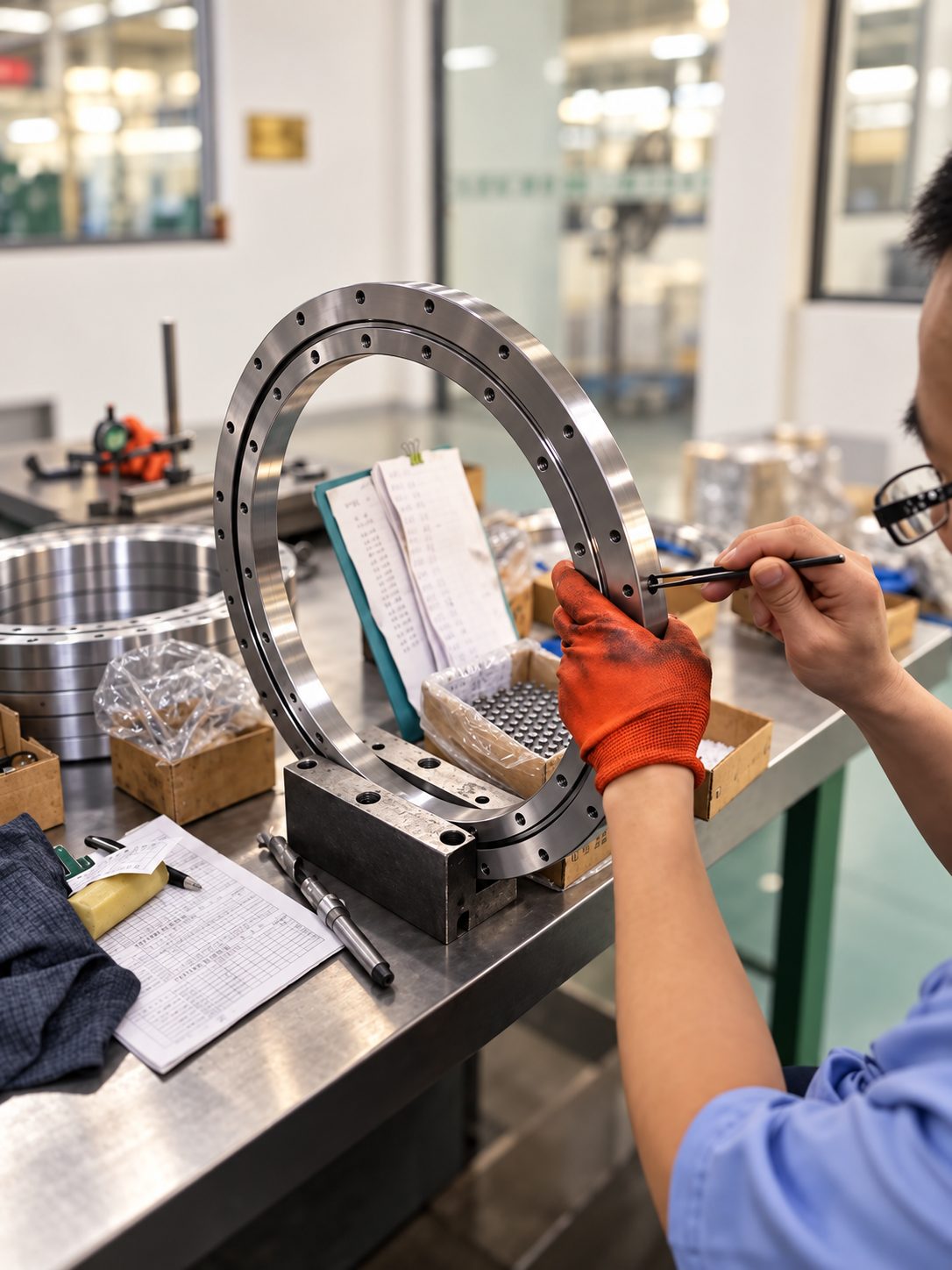 Technical DetailSoft-zone hardening process
Optimised spacer material for long-term stability
After repeated testing of different spacer materials and hardness levels, we selected high-hardness nylon spacers.
Their wear resistance and dimensional stability helped control roller movement, improve internal operating stability and maintain more consistent bearing performance over an extended service life.
- High wear resistance
- Stable roller guidance
- Consistent long-term friction torque
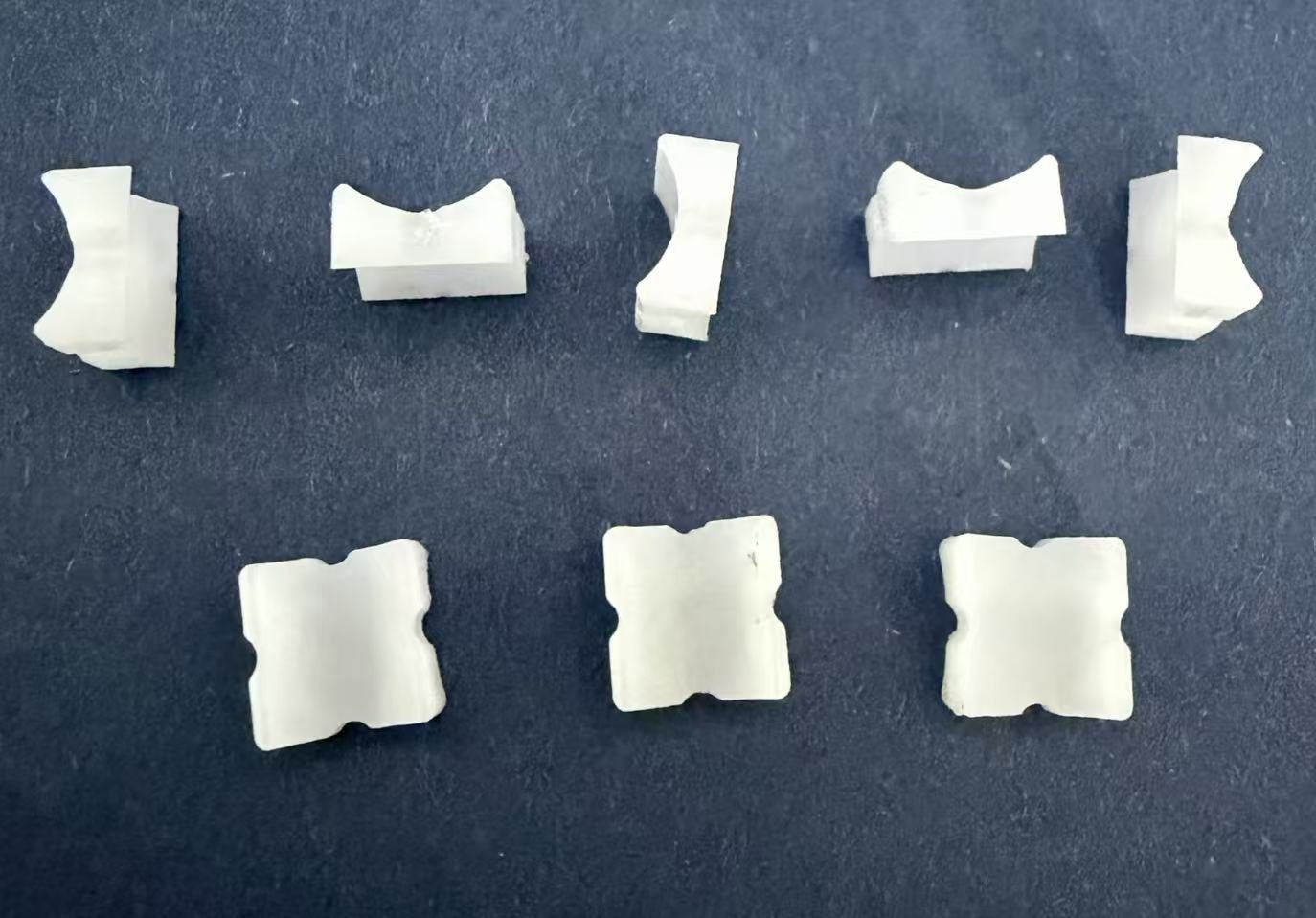 Component DetailHigh-hardness nylon spacers
Project Results
Stable mass production—and a partnership lasting nearly two decades
With the two technical improvements, we achieved stable mass production of the high-precision crossed roller slewing bearing. The product met the customer’s requirements for rotational accuracy, friction torque, load capacity and operational stability.
The project substantially reduced procurement costs and restored the customer’s confidence in a Chinese-developed alternative.
Significantly above the general production level of comparable high-precision products at the time.
This project demonstrated our complete capability—from operating-condition analysis and custom development to process design and stable mass production of large, high-precision crossed roller slewing bearings.
What Made It Possible
End-to-end engineering capability
Condition Analysis
On-site observation to understand actual assembly and load conditions.
Custom Development
Bearing design tailored to accuracy, torque and load requirements.
Process Innovation
Targeted heat treatment and internal component optimisation.
Stable Production
Controlled processes supporting repeatable mass-production quality.
Engineering Consultation
Looking for a reliable alternative to imported bearings?
Tell us about your operating conditions, accuracy targets and current product challenges.