
Customer Case
Customized Negative-Clearance Four-Point Contact Ball Slewing Bearing
Enables Stable Heavy-Load, Low-Speed Operation in Construction Machinery
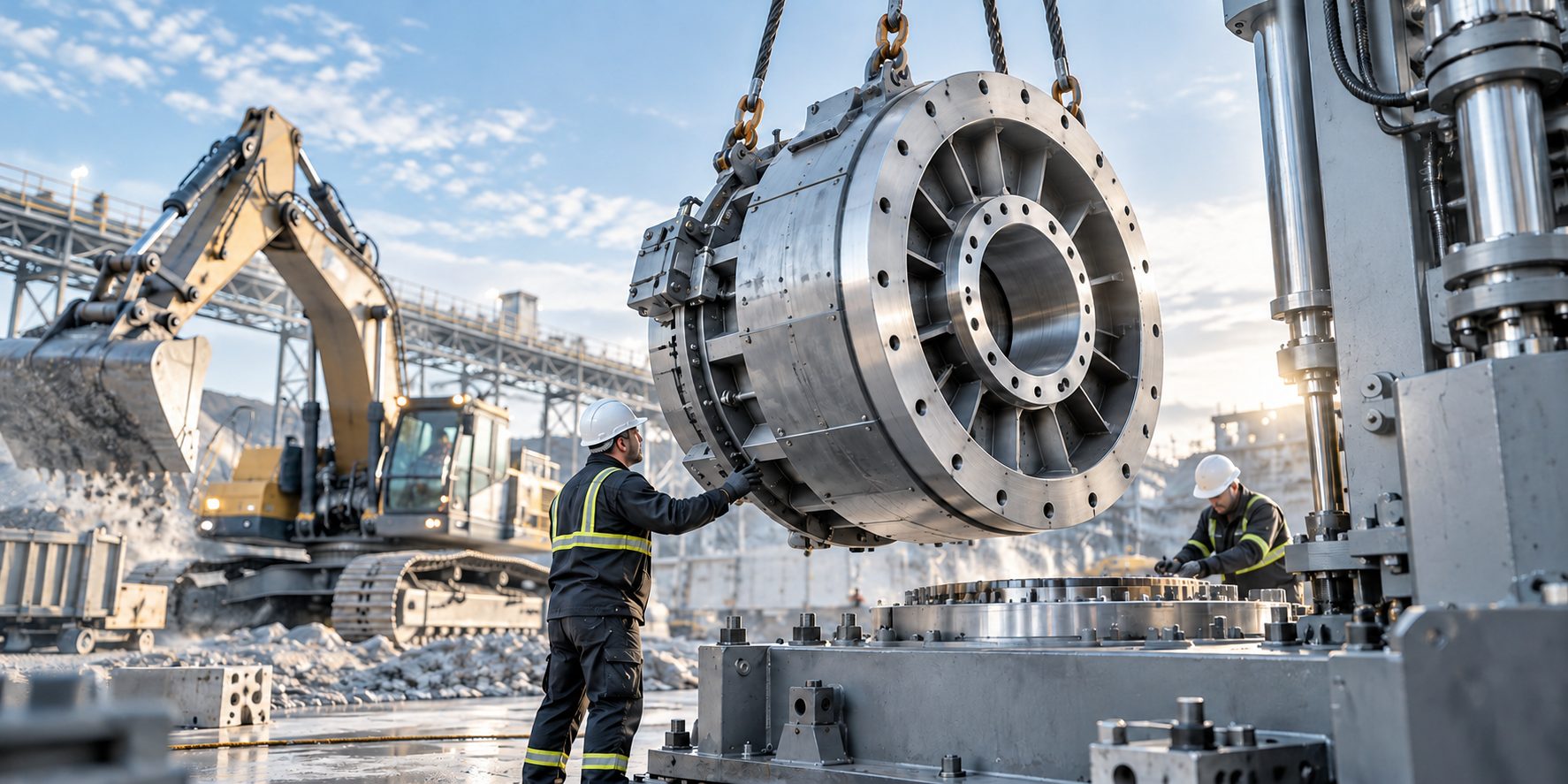
Project Overview
Construction Machinery
Customized Slewing Bearing for Heavy-Load, Low-Speed Operating Conditions
The customer is a professional construction machinery manufacturer whose equipment operates for long periods under heavy loads, low speeds, and frequent start-stop conditions. The equipment’s slewing mechanism must not only withstand large axial loads, radial loads, and overturning moments, but also maintain stable and uniform operating torque during forward and reverse rotation.
Based on the equipment structure, load conditions, and operating requirements, the customer commissioned LZK to design and develop a dedicated four-point contact ball slewing bearing. In addition to load-carrying capacity and rotational accuracy, the customer was particularly concerned with the bearing’s starting torque and the consistency of forward and reverse torque, in order to ensure smooth equipment rotation and reduce operational impact and abnormal fluctuations.
Heavy-Load Capacity, High Rigidity, Controllable Starting Torque, Consistent Forward and Reverse Torque
02 · Project Challenges
Threefold Test of Heavy-Load Starting, Uniform Forward and Reverse Rotation, and Reliability Under Low-Speed Heavy-Load Conditions
Construction machinery equipment requires frequent forward and reverse rotation during operation, placing multiple demands on the dynamic performance of the slewing bearing:
Difficulty in Heavy-Load Starting: Combined Equipment Weight and Operating Load
The equipment’s own weight combined with the operating load requires the bearing to have sufficient starting torque to start reliably;
High Requirement for Forward and Reverse Torque Uniformity: No Fluctuation Allowed During Frequent Switching
During frequent switching between forward and reverse rotation, excessive torque fluctuations can cause unstable equipment operation, affecting operating accuracy and equipment service life;
Reliability Under Low-Speed Heavy-Load Conditions: Stable Performance Required During Long-Term Operation
The bearing needs to maintain stable rotational accuracy and load-carrying capacity during long-term low-speed, heavy-load operation. This means the bearing must not only meet short-term performance requirements, but also provide long-term operational reliability and dimensional and torque stability.
03 · Customized Solution
Full-Process Customization from Negative-Clearance Design to Dedicated Torque Testing
Negative-Clearance Design
Ensuring Rigidity Under Heavy-Load Conditions
Based on the customer’s equipment load, speed, mounting structure, and operating conditions, the LZK technical team carried out targeted design of the bearing’s internal structure and clearance parameters. By adopting an appropriate negative-clearance design, reasonable preload is formed between the rolling elements and raceways, effectively improving the bearing’s axial rigidity, radial rigidity, and overturning-moment resistance, reducing deformation after the equipment is loaded, and better meeting the requirements of heavy-load, low-speed operation in construction machinery.
Professional Assembly and Adjustment
Ensuring Product Consistency and Smooth Forward and Reverse Rotation
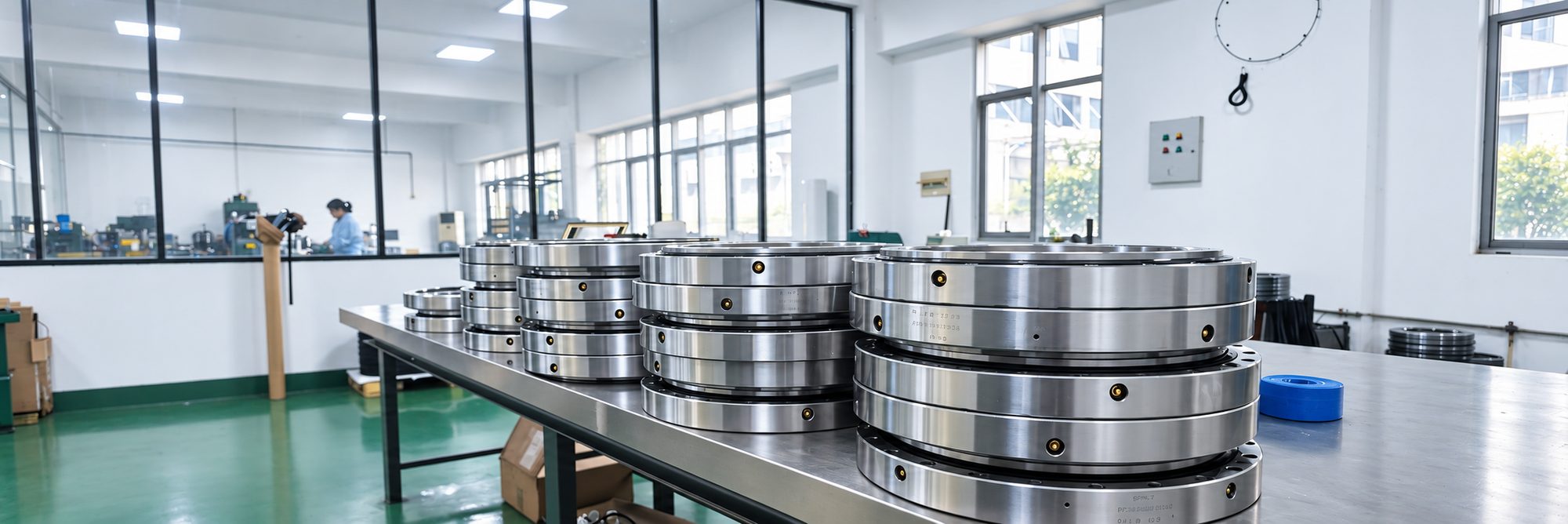
The bearing is assembled on a professional assembly machine. During assembly, technicians precisely control rolling-element matching, spacer-block arrangement, internal preload condition, and rotational resistance, and make repeated adjustments based on actual inspection results.
Through standardized assembly procedures and precision adjustment, the internal load distribution of the bearing is kept reasonable, avoiding abnormal friction caused by excessive local preload or assembly deviation and ensuring smooth forward and reverse rotation of the bearing.
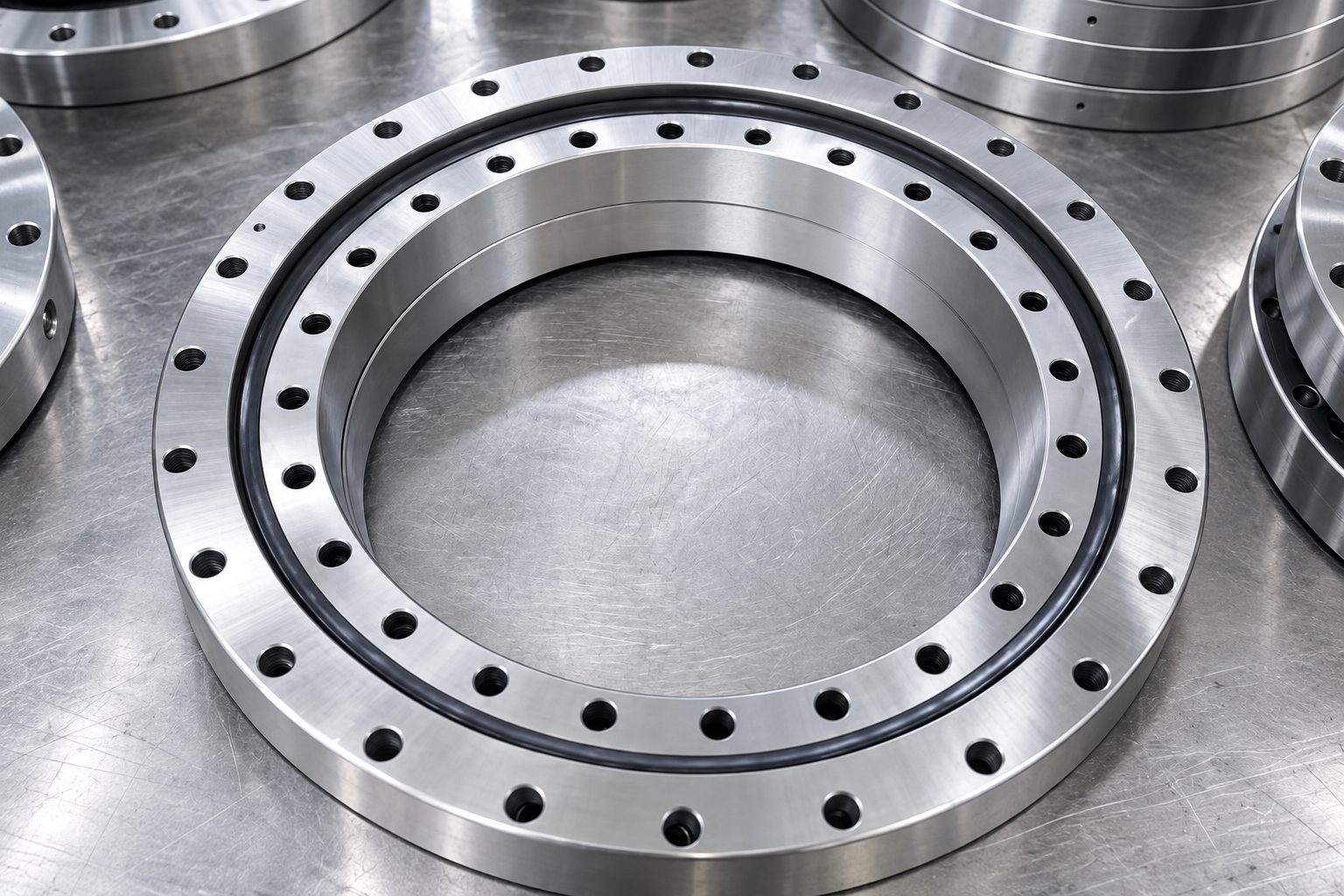
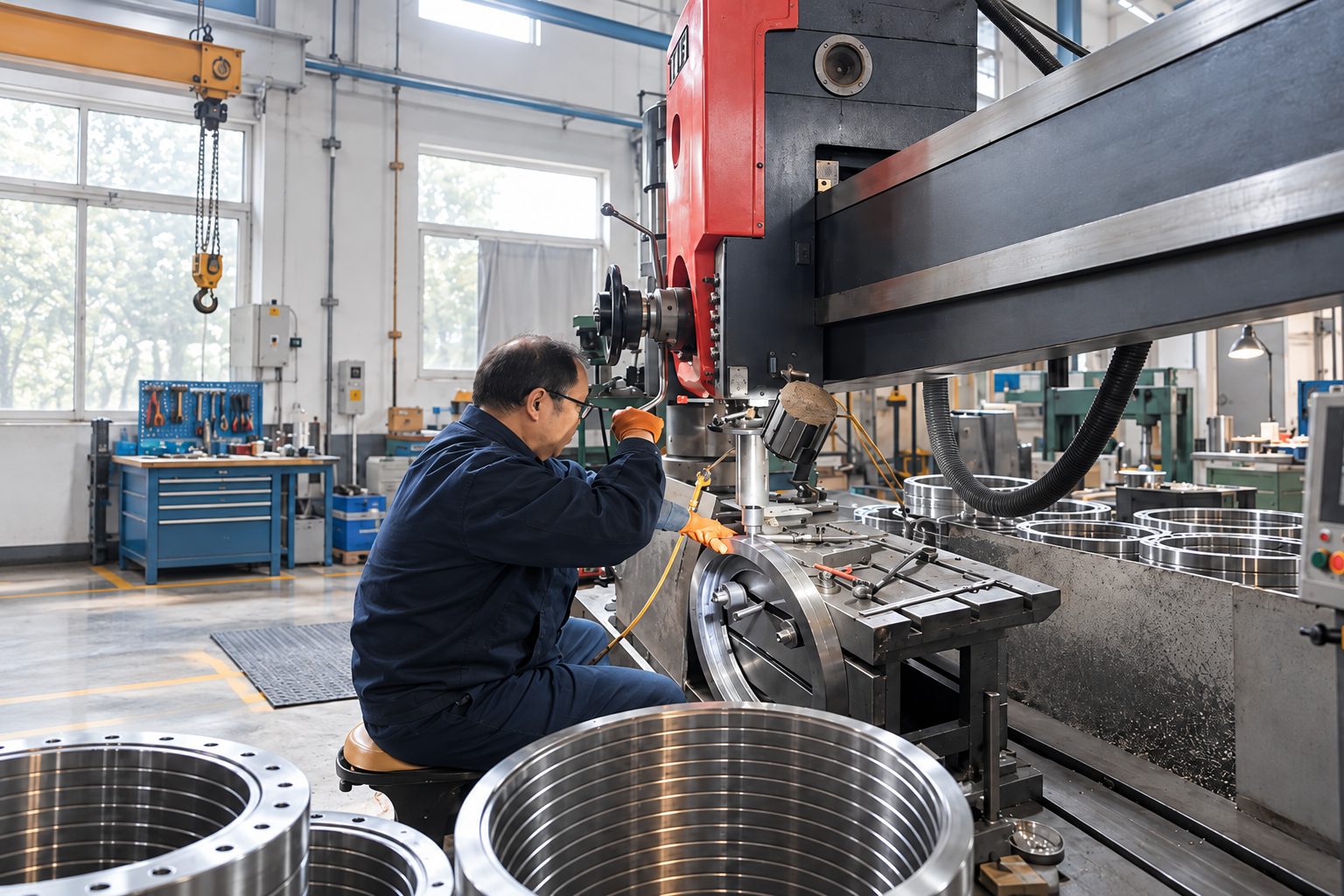
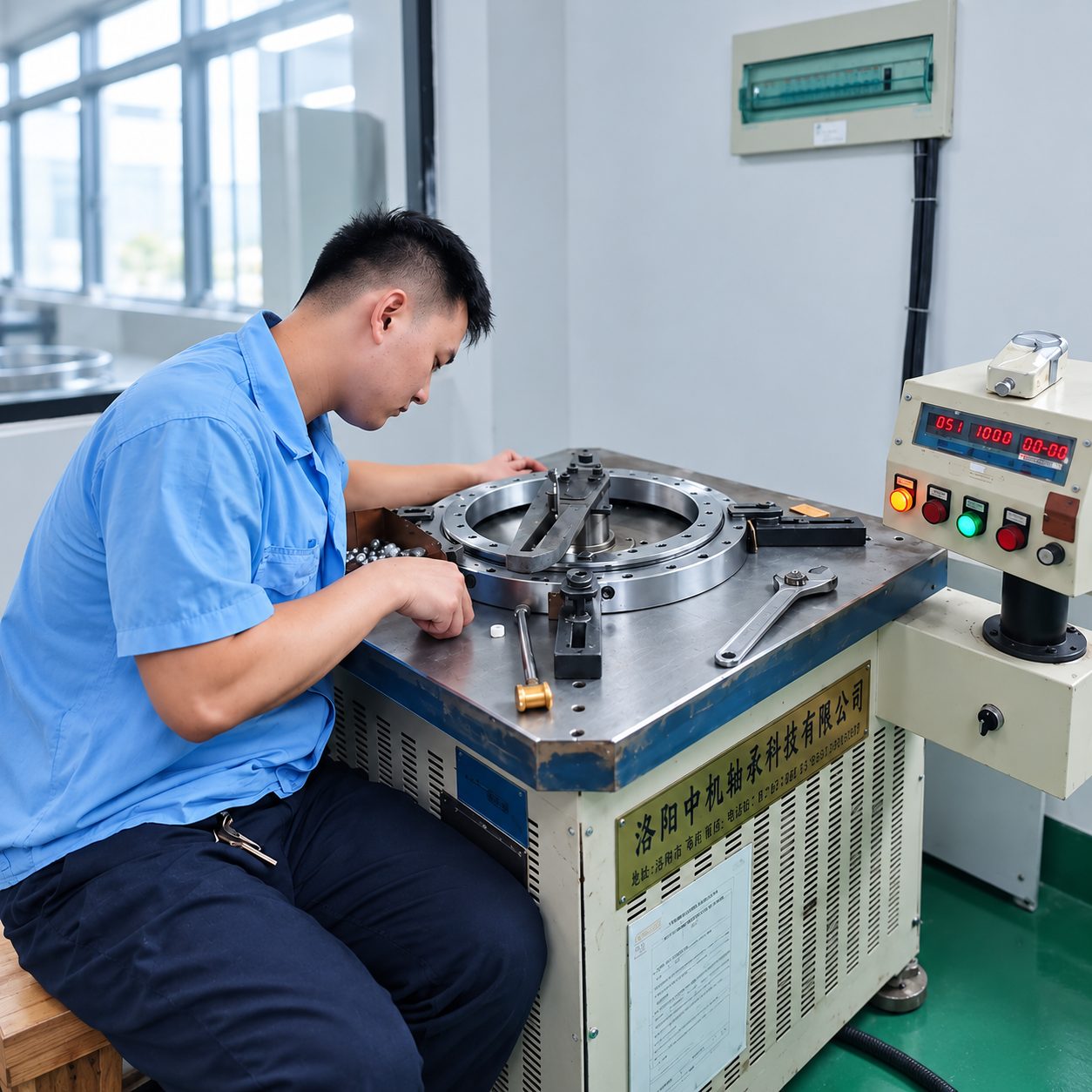
In-House Developed Torque Measuring Machine
Overcoming the Challenge of Torque Uniformity
Because this bearing has a relatively large starting torque and the customer’s equipment requires both forward and reverse operation, conventional inspection methods cannot accurately reflect torque changes in different rotational directions.
For this reason, LZK specially designed and manufactured a torque measuring machine according to the bearing’s dimensions and inspection requirements, for testing the starting torque, forward torque, reverse torque, and torque fluctuations during rotation of this type of bearing.
With dedicated testing equipment, technicians can analyze the bearing’s operating condition throughout a complete rotation cycle more intuitively and accurately, and make targeted adjustments to the assembly and preload condition based on the measurement results, ensuring uniform forward and reverse torque and smooth torque variation.
04 · Project Results
High Rigidity, Heavy-Load Capacity, and Smooth Forward and Reverse Operation Recognized by the Customer
After structural design, precision machining, professional assembly, and torque testing and adjustment, this negative-clearance four-point contact ball slewing bearing met the customer’s requirements for high rigidity, heavy-load capacity, and stable forward and reverse operation of its construction machinery equipment.
Even under relatively high starting torque, the bearing can still maintain uniform and smooth forward and reverse rotation, helping reduce impact and vibration during equipment operation, improve the control stability of the slewing mechanism, and enhance overall equipment operating reliability. The customer has maintained long-term cooperation with our company.
Conclusion
Integrated Bearing Solutions
Integrated Bearing Solutions for Customized Construction Machinery Requirements
Leveraging its capabilities in bearing design, precision manufacturing, assembly and adjustment, and dedicated testing equipment development, LZK can provide customers with integrated bearing solutions covering technical analysis, customized design, production, and testing according to the structures and operating conditions of different construction machinery equipment.
Comprehensive Engineering Capabilities
Operating Condition Analysis
Customized Bearing Design
Clearance and Preload Control
Precision Manufacturing
Professional Assembly
Torque Consistency Verification
Engineering Consultation
Custom Bearings and Torque Control
Do you have requirements for construction machinery supporting bearings or special torque control? Contact us, and we will provide professional technical evaluation and customized solutions.